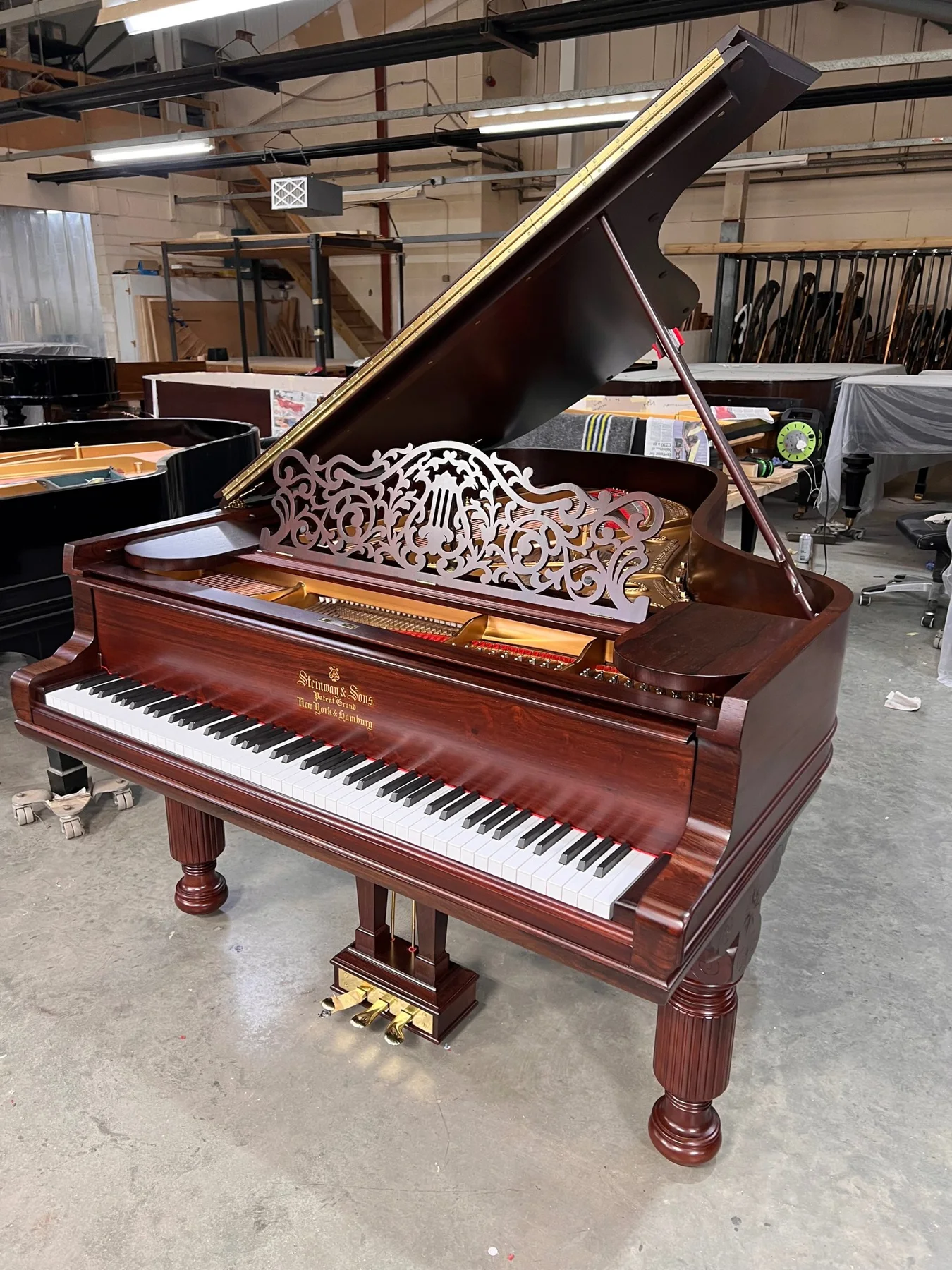
FROM THE WORKSHOP · 2024
Rebuilt or restored? Understanding the difference
What lies beneath a beautiful cabinet, and the questions to ask before choosing a rebuilt piano.
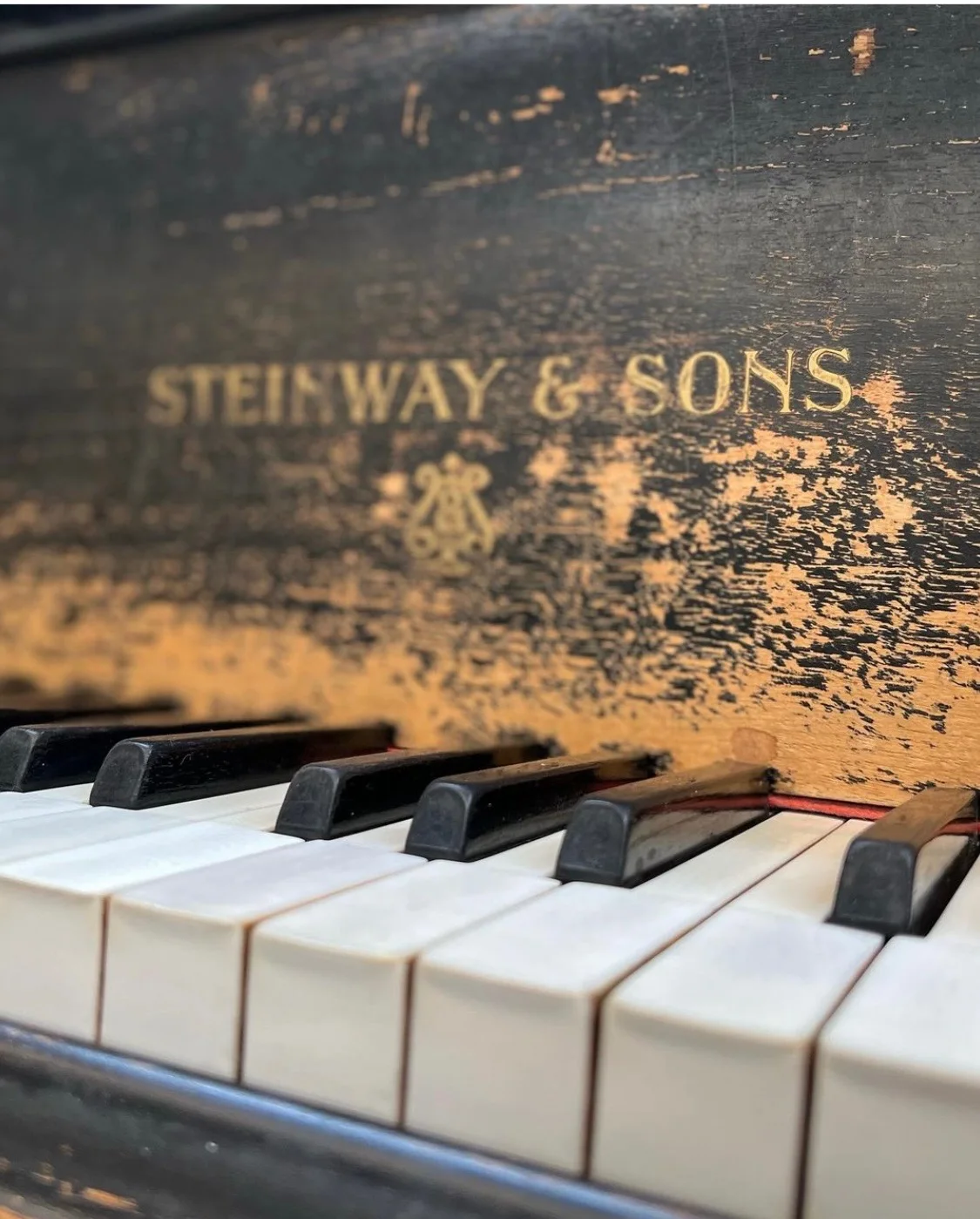
When looking for a piano, the word restored appears everywhere. Unfortunately, it is also one of the most ambiguous terms in the piano trade.
A piano may be described as restored after receiving little more than a new set of strings, replacement hammers or a polished cabinet. Another instrument may have undergone extensive structural, mechanical and cosmetic work, yet both can carry exactly the same description.
That is why, at Piano Restorations Ltd, we say our pianos are rebuilt.
What does “restored” really mean?
There is no universally accepted standard defining what must be done before a piano can be advertised as restored. One restorer may replace only the visibly worn parts, while another may undertake far more comprehensive work.
This makes it difficult for buyers to compare pianos properly. Two instruments of the same make and age may both be described as fully restored, despite having received very different levels of attention.
A freshly polished case can look impressive, but it tells you very little about the condition of the piano’s structure, action or sound-producing components. The most important work is often hidden beneath the surface.
What do we mean by “rebuilt”?
For us, rebuilding means beginning again.
We strip the piano back to its bare case and carefully assess every part of the instrument. Its structure, action, materials and intended tonal character are considered as a complete system, not as a collection of isolated components.
Drawing on generations of knowledge, our craftsmen rebuild each piano with an understanding of what made that particular manufacturer distinctive. A Steinway should retain the qualities associated with Steinway; a Bechstein should not be made to sound like a Bösendorfer, nor should a Blüthner lose the tonal character for which it was designed.
Our aim is not simply to make an old piano look attractive or function adequately. It is to rebuild an instrument that can once again offer the tone, response, stability and longevity expected of a fine piano.
The false economy of incomplete work
It is understandable that owners want to control the cost of restoring a piano. Spending a few hundred or even a few thousand pounds less today can appear to be the sensible choice.
The difficulty arises when money is spent on visible or partial improvements while worn structural components remain untouched. The piano may initially look and sound better, but the underlying problems have only been postponed.
Within a relatively short period, the owner may discover that the instrument cannot hold its tuning reliably, that its tone is deteriorating or that further major work is required. Previously installed components may then have to be removed or replaced as part of a proper rebuild.
We regularly rebuild pianos whose owners have already spent between £8,000 and £15,000 on work carried out within the previous 15 years, and sometimes considerably less. They believed they were paying for a fully restored instrument, only to find that essential work had been omitted or completed without considering the piano as a whole.
The result is painful: the original expenditure has been lost, and the owner must now pay again to have the instrument rebuilt correctly.
Ask what has actually been done
When considering a restored or rebuilt piano, do not rely on the description alone. Ask for a detailed record of the work.
Has the soundboard been replaced? Has a new tuning plank been fitted? Which hammers were chosen, and why were they considered suitable? Were the action, bridges, strings and structural components addressed? Who carried out the work, and what experience do they have with that manufacturer?
A reputable rebuilder should be able to explain not only what was done, but why each decision was right for that particular piano.
Rebuilding for the next generation
A fine piano was never intended to be disposable. Properly rebuilt, it can continue to serve musicians and families for generations.
At Piano Restorations Ltd, rebuilding means respecting the original maker’s design while applying generations of practical knowledge and craftsmanship. We renew the instrument from its foundations, carefully matching materials and components to recover its individual tonal character.
The difference between restored and rebuilt is not simply a choice of words. It is the difference between improving selected parts of a piano and taking responsibility for the instrument as a whole.
Before investing in a restored piano, or commissioning work on one you already own, make sure you understand exactly what you are paying for. Doing the job properly today can prevent disappointment, disruption and significantly greater expense in the years ahead.